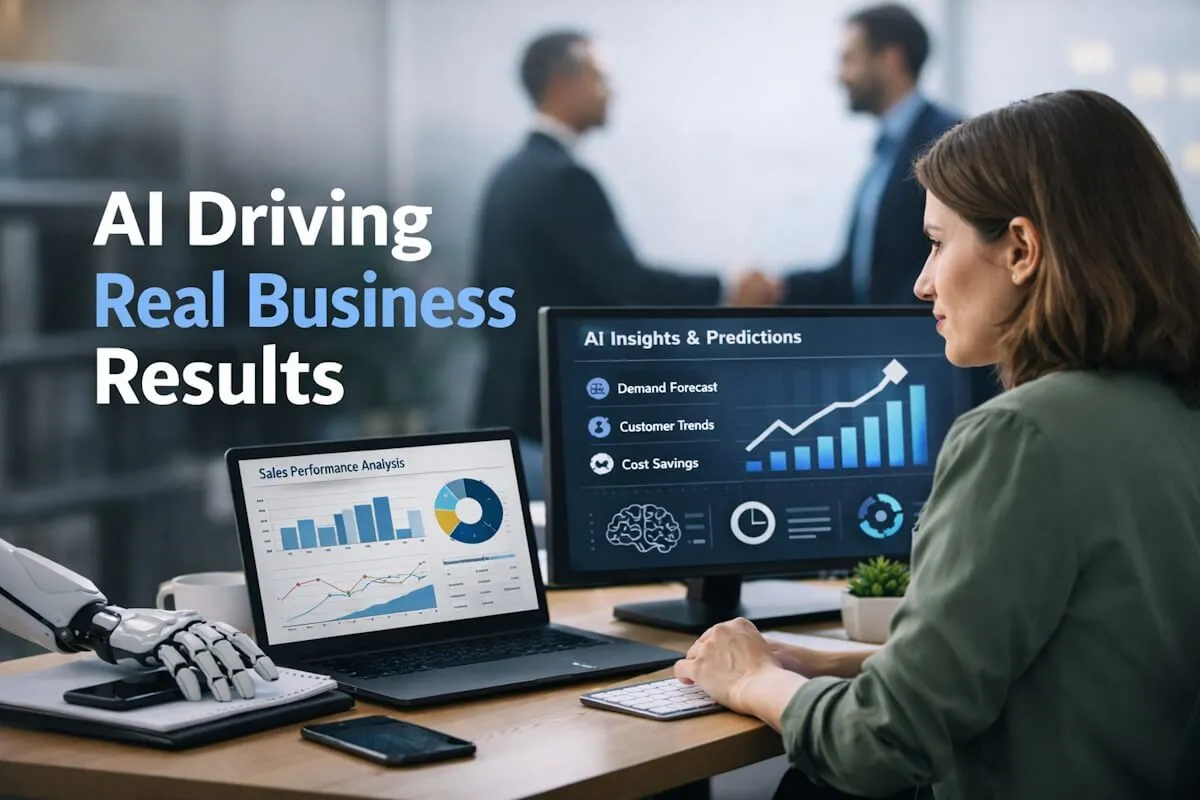
Artificial intelligence is no longer a buzzword people throw around in meetings just to sound current. You’ve probably seen it creep into tools you already use. Some quietly, some in your face. But here’s the real question. Is it actually helping businesses grow, or is it just another tech trend that looks good in presentations?
If you’re running a business or managing a team, you don’t care about hype. You care about results. Better margins. Faster processes. Fewer headaches. That’s where the real conversation around artificial intelligence starts in 2026.
Let’s break it down in a way that actually makes sense.
It’s Not About Technology. It’s About Outcomes
A lot of companies still get this wrong. They chase tools instead of solving problems.
Artificial intelligence works best when you flip that thinking. Start with a clear issue. Maybe your customer support team is overloaded. Maybe your sales pipeline feels messy. Maybe your data sits there doing nothing useful.
Now ask yourself. Where can smart systems reduce effort or improve decisions?
That’s the real value. Not the tool itself.
Companies that see results don’t say, “We need AI.” They say, “We need to fix this process,” and then use AI where it fits.
Smarter Decisions Without Guesswork
Every business sits on data. Sales numbers, user behavior, support tickets, product usage. The problem is not lack of data. It’s what you do with it.
In 2026, businesses are using AI to make decisions that once depended on gut feeling.
For example:
- Forecasting demand more accurately
- Identifying which leads are worth pursuing
- Understanding why customers leave
Instead of reacting late, you start seeing patterns early.
Think about your current workflow. How many decisions are still based on assumptions? That’s where the shift happens.
Customer Experience That Feels Personal
Customers don’t want generic interactions anymore. They expect businesses to “get” them.
AI helps you deliver that without hiring a huge team.
You can:
- Recommend products based on real behavior
- Offer support that responds instantly
- Personalize emails without writing each one manually
And no, it doesn’t mean robotic conversations. When done right, it actually feels more human because it responds faster and more accurately.
That’s why businesses investing in AI Development Services are focusing heavily on customer experience. It’s where the fastest wins usually show up.
Cost Reduction That Actually Makes Sense
Let’s be honest. Every business wants to cut costs. But cutting the wrong corners can hurt more than help.
AI changes how you approach this.
Instead of removing people, it removes repetitive work.
Think about tasks like:
- Data entry
- Report generation
- Basic customer queries
- Internal document searches
These tasks don’t need human creativity. They need consistency and speed.
By offloading them, your team gets time back. And that time goes into work that actually moves the needle.
Speed Becomes a Competitive Advantage
In 2026, speed matters more than ever. Not just how fast your website loads, but how fast your business operates.
How quickly can you:
- Respond to a lead?
- Launch a new feature?
- Adjust pricing?
- Fix a customer issue?
AI helps reduce delays across the board.
You don’t wait days for reports. You don’t manually sort through data. You don’t rely on long approval chains for simple insights.
Everything moves faster.
And here’s the thing. Customers notice speed. Even if they don’t say it directly, it affects how they choose.
Better Hiring and Team Productivity
Hiring is tricky. You want the right people, but finding them takes time. Screening them takes even longer.
AI tools now help:
- Filter candidates based on actual fit
- Analyze resumes beyond keywords
- Predict performance trends
But it doesn’t stop there.
Once your team is in place, AI helps them work better.
Developers write cleaner code faster. Marketers test ideas quickly. Support teams handle more queries without burnout.
That’s why many companies choose to Hire AI Developers who can build solutions tailored to their workflow instead of relying only on off-the-shelf tools.
It Helps Small Businesses Compete
This is one of the biggest shifts.
Earlier, advanced tech was only accessible to large companies. Now, smaller teams can use the same level of intelligence without massive budgets.
A small eCommerce brand can:
- Predict buying patterns
- Automate marketing campaigns
- Offer personalized shopping experiences
All without building a huge internal team.
That levels the playing field.
If you’re a smaller business, this is your moment. The gap between you and bigger competitors is not as wide as it used to be.
Real Use Cases That Are Working Right Now
Let’s move away from theory for a second.
Here are some practical ways businesses are using AI in 2026:
1. Sales Teams Closing Deals Faster
AI tools analyze past deals and suggest the best next step. Sales reps spend less time guessing and more time closing.
2. Customer Support That Never Sleeps
Chat systems handle basic queries 24/7. Complex issues still go to humans, but the load is lighter.
3. Marketing That Learns and Adapts
Campaigns adjust based on performance in real time. No waiting for end-of-month reports.
4. Operations That Run Smoother
Inventory, logistics, and supply chains are managed with fewer errors.
5. Finance Teams Spotting Risks Early
Irregular patterns in transactions are flagged instantly.
Now ask yourself. Which of these applies to your business right now?
The Hidden Value Most People Miss
Everyone talks about automation and speed. But there’s another side that often gets ignored.
Clarity.
When AI systems process your data, they bring clarity to what’s working and what’s not.
You stop wasting time on activities that don’t produce results.
You stop chasing strategies that look good but don’t convert.
You start focusing on what actually matters.
That clarity alone can change how your business operates.
Challenges You Should Expect
Let’s not pretend it’s all smooth.
There are challenges, and you should be aware of them before jumping in.
Data Quality Issues
If your data is messy, your results will be too. Clean data matters more than anything.
Wrong Expectations
AI is not magic. It won’t fix broken processes overnight.
Resistance from Teams
People worry about change. Some fear losing their roles. You need to communicate clearly.
Poor Implementation Choices
Using the wrong tool for the wrong problem wastes time and money.
The good part? These issues are manageable if you plan properly.
How to Start Without Overcomplicating It
You don’t need a huge roadmap to get started.
Try this simple approach:
Step 1: Identify One Problem
Pick something specific. Not ten things. Just one.
Step 2: Measure It
Know your baseline. How long does it take now? What does it cost?
Step 3: Apply AI in a Focused Way
Use a tool or build a small solution.
Step 4: Track Results
Did it save time? Did it improve accuracy?
Step 5: Expand Slowly
Once you see results, move to the next problem.
This keeps things practical. No chaos. No wasted effort.
What Businesses Will Look Like Moving Forward
By the end of 2026, you’ll see a clear divide.
Businesses that:
- Use AI to improve operations
- Make decisions based on real data
- Move quickly
And businesses that:
- Stick to old processes
- Depend on manual work
- React late
The gap will grow.
So the question becomes simple. Which side do you want to be on?
A Quick Reality Check for You
Take a moment and think about your current setup.
- Are your teams spending time on repetitive tasks?
- Do you rely on reports that take too long to generate?
- Are you missing opportunities because you don’t see patterns early?
If the answer is yes to even one of these, there’s room for change.
And you don’t need to overhaul everything overnight.
Start small. Stay consistent.
Where This All Leads
Artificial intelligence is not replacing businesses. It’s reshaping how they operate.
It’s helping you:
- Make better decisions
- Serve customers faster
- Use your resources wisely
But only if you approach it the right way.
Not as a trend. Not as a checkbox.
As a tool to solve real problems.
So, What’s Your Next Move?
You’ve got two choices.
Wait and watch how things play out.
Or start testing, learning, and improving now.
The businesses that win in 2026 are not the ones with the biggest budgets. They’re the ones that take action early and keep refining what they do.
So here’s a simple question to end on.
What’s the one problem in your business that you’d fix first if you had the right system in place?
Start there.